Tuesday, 8 July 2014

ONION REVENGE !!!

Why do we cry while peeling an onion??


 You must have noticed that when you peel or slice onions, tears will start flowing down the cheek.  This is because when an onion is cut, you break its cells, releasing their contents. Chemicals known as amino acid sulfoxides are released to from sulfenic acids. Enzymes in the cell, that were kept separate, now are free to mix with the sulfenic acids, to produce a volatile sulfur compound that wafts upward toward your eyes. This gas reacts with the water in your tears, to form sulfuric acid.


The sulfuric acid burns, stimulating your eyes to release more tears to wash the irritant away. Cooking the onion inactivates the enzymes, so that you don’t cry anymore! You can also chop the onions in a bowl of water, which prevents the vapors reaching your eyes, and irritating them.     

Monday, 7 July 2014

CARBOHYDRATES:: PART 4

POLYSACCHARIDES

-          Polysaccharides are forms when more than two monosaccharides are attached by glycosidic bond.
-           Polysaccharides are further classified on the types of monomer units they yield upon hydrolysis.
-           

o   Homopolysaccharides: - These yield same monomer units upon hydrolysis.

§   Amylose is a polysaccharide of glucose molecules.
§  Glycogen.
§  Cellulose is a polysaccharide of glucose molecules.


o   Heteropolysaccharides: - These yield different monomer units upon hydrolysis.

§  Mucopolysaccharide.
§  Heparin.


-          Cellulose is the most abundant polysaccharide.

-          Polysaccharides are usually used as food storage forms or main ingredients of cell walls.

Saturday, 5 July 2014

INTERESTING COCKROACHES !!!!


Did you know that cockroaches were on the planet even before the dinosaurs appeared? While many species of animals have become extinct, cockroaches have survived to this day. In fact, it is said that even a nuclear blast cannot destroy all of them! Amazingly, cockroaches can live a month without food but, just a week without water. What is more, a cockroach can live a week without a head, and it dies after a week due to lack of water!!    

Friday, 4 July 2014

CARBOHYDRATES :: PART 3

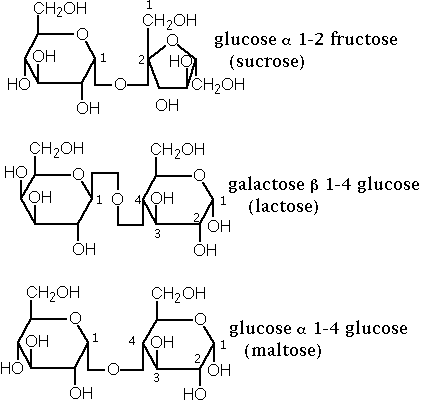
 DISACCHARIDES
-          These are formed when two monomers are attached by glycosidic bond.

-          Glycosidic bond is formed by removal of a water molecule from two monosaccharides.
-          Example of disaccharides: -
o   Sucrose (glucose and fructose as its monomer unit).
o    Lactose (glucose and galactose as its monomer unit).
o   Maltose (glucose and glucose as its monomer unit).


REDUCING SUGARS
-          Carbohydrates that have a free aldehyde at the C1 or free ketone at C2 are called reducing sugars.
-          Eg: - glucose, fructose, lactose, maltose.

NON-REDUCING SUGARS
-          These don’t have free aldehyde or ketone groups.

-          Eg: - sucrose and glycogen.


Thursday, 3 July 2014

CAN YOU TICKLE YOURSELF??

        CAN YOU TICKLE YOURSELF???


When someone tickles you under your arm, or on the sole of your feet, you start laughing uncontrollably. You laugh mostly because of surprise. Even if you know you are about to be tickled you don't where, so you react with a laugh. when you try to tickle yourself it does not work, because your brain you already know that you are going to do it. To put it simple you can't tickle yourself because you can;t surprise yourself.

The feeling you have when you are tickled is similar to the feeling when bugs or spiders crawl on you. Your reaction to tickle is actually the brain's reaction to an unexpected sensation, whether it is tickle or crawly feeling on your body.  

Wednesday, 2 July 2014

CARBOHYDRATES:: PART 2

MONOSACCHARIDE

-          Monosaccharides are defined as polyhydroxy       aldehydes or ketones.

-          Monosaccharides can be further divided into groups upon the number of carbon atoms they have.

o   Triose (3 carbon atoms) eg: - glycerose.

o   Tetrose (4 carbon atoms) eg: - erythrose.

o   Pentose (5 carbon atoms) eg: - ribulose.

o   Hexose (6 carbon atoms) eg: - glucose and fructose.

o   Heptose (7 carbon atoms) eg: - glucoheptose.

-          A carbon atom to which four different groups are attached is called a chiral carbon. 


-          Because of this chiral carbon monosaccharides show isomerism.

===========================================
please leave your comments, so that I can improve.

Tuesday, 1 July 2014

FOSSILS

FOSSILS

A fossil is any trace of an ancient form of life. Do you know how fossils are formed? When plants and animals die, their remains decay. However, the hard parts of their body, such as the bones, do not decompose quickly. They are sometimes buried in muddy swamps, or in the sandy sediments at the bottom of the sea. Over millions of years, the sediments harden into rock, and the bones become fossils. Wind, water and ice may strip away the layers of rock over the years, and the fossils are then exposed.


Fossils are among the most valuable sources of information about the earth’s history. They tell us about the organisms that lived on earth from the time of the oldest fossils, about 3.8 billion years ago, to the present. By studying fossils, we can learn not only about the creatures and plants of the distant past, but how they grew, what they ate, how they interacted, and many aspects of their behaviour.